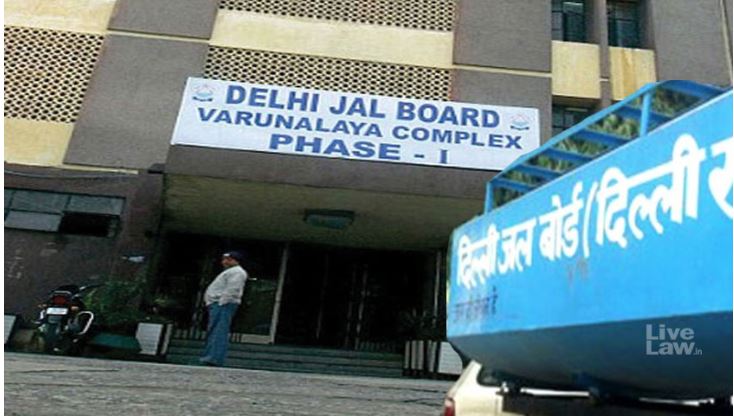
Delhi: The Delhi government has changed the old rules for determining water and sewer infrastructure charges. The charge will now be based solely on the actual water consumption, rather than the overall area-based system, and will only apply to new or additional construction. The revised policy, introduced by the Delhi Jal Board (DJB), is also expected to provide concessions of up to 70% for several categories of residential colonies across the capital.
Chief Minister Rekha Gupta said the decision is intended to reduce the financial burden on residents while ensuring that water charges are linked more fairly to real consumption patterns. Under the current system, charges are often calculated based on the total built-up area of a property, a method officials believe does not accurately reflect actual usage.
According to the new framework, infrastructure charges will now apply only to new construction or additional development within a property. In cases where reconstruction does not increase water demand, no extra charges will be imposed. Officials stated that this change would particularly benefit homeowners, institutions, and commercial establishments that previously faced higher charges despite moderate water consumption.
The government has also introduced category-wise rebates to provide relief to residents in different colonies. As part of the revised structure, E and F category colonies will receive a 50% concession, while several other residential areas may receive benefits ranging up to 70% depending on the category and infrastructure status. Authorities said the policy has been designed to make the billing system “simplified, transparent and relief-oriented.”
Officials from the DJB said the revised model could include improved metering systems, enhanced monitoring mechanisms, and better demand assessment tools to ensure accurate billing. The changes are expected to help authorities identify excessive consumption, reduce water wastage, and improve revenue collection efficiency across the city.
Experts believe the move could encourage long-term water conservation in Delhi, where rising population, urban expansion, and increasing summer demand continue to place pressure on water resources. Consumption-based pricing is considered a globally accepted method for promoting responsible water use while ensuring equitable distribution.
The new water plan matches Delhi’s goal to upgrade the city and manage resources better. Experts say that knowing exactly how much water people use and having a smooth billing system are key to keeping city water supplies working well. Once fully implemented, it could completely improve how Delhi handles its water and act as a helpful example for other Indian cities to follow